Photography of Richard Morawetz
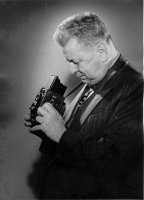
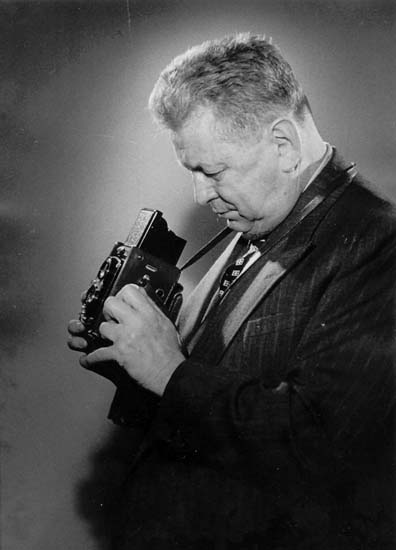
Richard with his camera
Photo: Clarisse of Hanau |
One of the earliest photographs taken by Richard Morawetz was a photograph of
his mother. As she died when Richard was only 17 years old, his interest in
photography must have already been kindled at an early age.In those days,
photography was still in its infancy. There was no film; instead, pictures were
taken on large glass plates. In 1910 when Richard Morawetz made his Asian tour,
he took 700 of these glass plates and two cameras in many suitcases. These
plates needed a long exposure time, and so the camera had to be set up on a
tripod. This led to one amusing incident in India when Richard went up to Mount
Abou to see the Temple of Jains. He had been warned that it was forbidden to
take any photographs, but that did not deter him:
"Needless to say, the light was dim inside and, in order to take pictures, I had to use a tripod and an exposure
of several minutes. The moment the custodian saw me setting up my equipment, he started gesticulating and
explaining that I was not allowed to take pictures. However, I gestured back at him and told him in Czech
that I was going ahead anyway. This went on for a little while and, in the end, I had him so confused and
intimidated that he let me do as I pleased. Of course these particular photos turned out to be something of a
rarity, they were published in an art magazine after my return home."
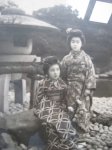
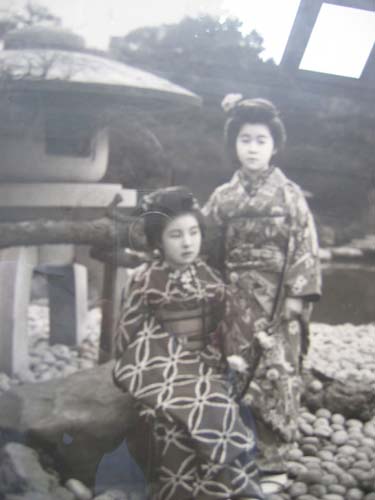
Richard's sole surviving
photo from his trip to Asia. |
The photographs that Richard took as he travelled through Burma, Thailand,
Java, Southern China and Japan were some of the earliest photographs ever to be
taken in Asia, and stirred a lot of interest on his return. In a 1904 trip to
North America, Richard took many pictures of San Francisco before the
devastating 1906 earthquake. Unfortunately almost all of these
photographs were destroyed during the second World War. Only one photograph from
his Asian trip, of two girls in kimonos which Richard had given as a gift to his
secretary Mrs. Jedličkova, was saved. After the war, she gave this photograph to
Richard's son, Herbert.
After emigrating to Canada, Richard took up his photography hobby once more,
developing and printing his pictures in his own dark room in the basement of his
home. He used to jokingly refer to his dark room as his "Panama" in reference to
the eccentric Teddy from the play Arsenic and Old Lace, who buries his
murdered guests in his basement, believing he is
Teddy Roosevelt, burying the victims of yellow fever during the construction of
the Panama Canal. Amazingly although Richard was over 60 years old when he
started developing pictures and his hands already shook with the tremors of old
age, when he poured the chemicals required for developing pictures, his hands
were absolutely steady.
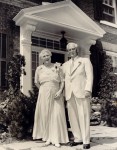
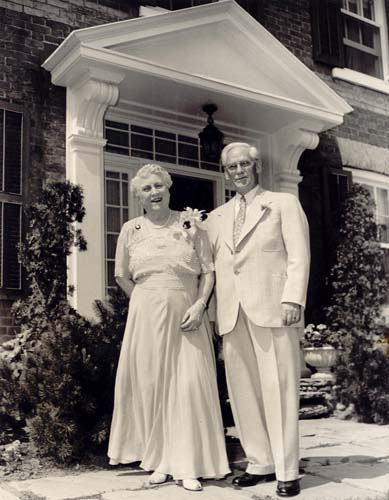
Mr. & Mrs. E. Burton |
While the World War II was raging in Europe, Richard Morawetz let it be known
that if any woman had a husband fighting in the army, he would photograph their
children free of charge. This allowed many women on small allowances, as well as
more prominent families to have their children photographed.
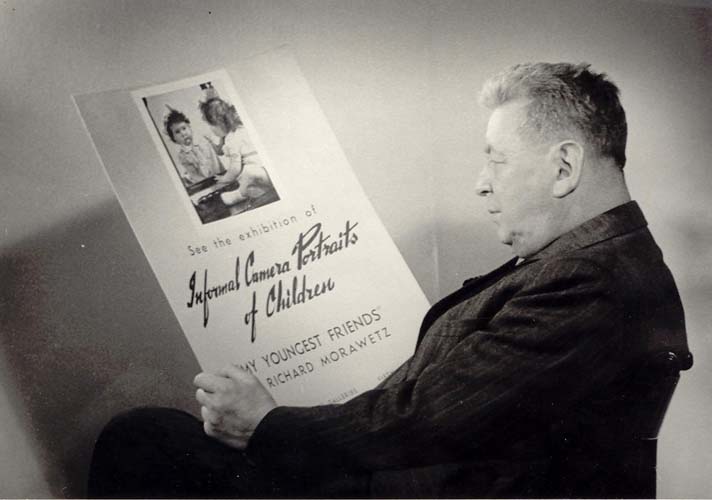
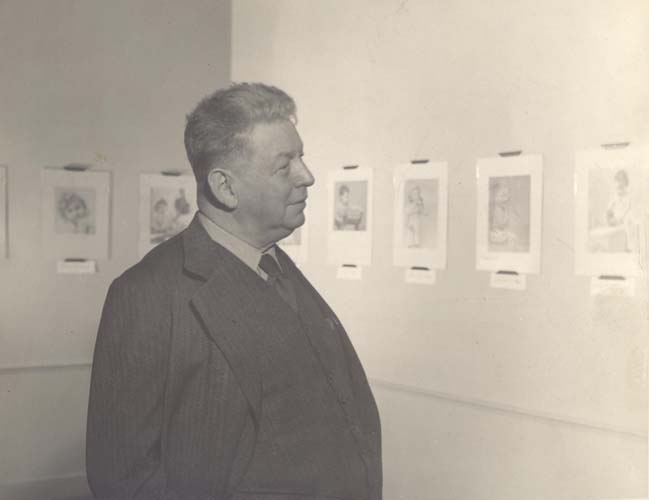
Richard collected the best of these photographs, and on two separate occasions,
exhibited his work in the Simpson's Galleries in Toronto. This was arranged by Mr. E.
Burton, founder and owner of Simpson's stores, who had become friends with
Richard Morawetz.
 Click here to view some of the photographs from these exhibitions.
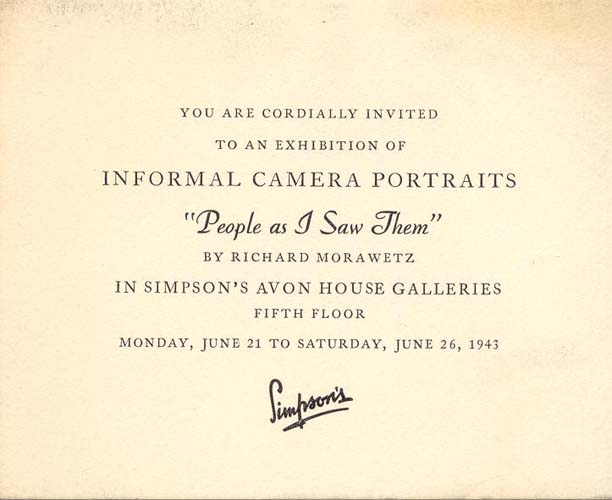
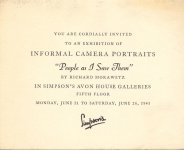
| People As I Saw Them
June 21 - 26,
1943
Simpson's Avon House Galleries |
Reviews of "People as I Saw Them":
- Jun. 21, 1943, The Evening Telegram
- Jun. 22, 1943, The Globe and Mail
- Jun. 22, 1943, Toronto Daily Star
- Jun. 25, 1943, Toronto Daily Star
- Jun. 26, 1943, The Globe and Mail
 |
|
|
|
| My Youngest Friends
May 19 - ?, 1945
Simpson's Avon House Galleries |
Reviews of "My Youngest Friends":
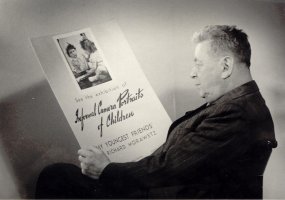
Photo: Clarisse of Hanau |
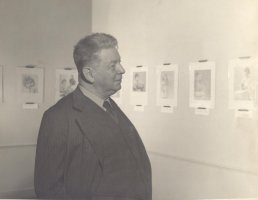
Richard viewing his photographs on exhibit.
|