Social conditions for the common labourer in the early 1900s were terrible,
and as both men and women usually worked, infant mortality was very high.
Richard describes these conditions in the following excerpt from Talks with
My Father, his recollections as transcribed by his daughter, Sonja:
When I first came to work in the factory, the generally accepted working day was eleven hours. In our
factory conditions were a little better: ten and a half hours a day, an hour less on Saturdays. As I have
already mentioned, the office remained open even on Sunday mornings.
My father used to tell us how when he was a young man, workmen who lived four or
five miles away from the factory used to walk the whole way, summer and winter,
day after day, barefoot! But that was before my time. When I came, there were
already some houses for workers' families and new ones were being built. In
these houses, every family occupied one room which was used for everything -
bedroom, living room and kitchen. There were no bathrooms and, to the best of my
knowledge, there are none to this day. Don't ask me where people wash.
It was by no means unusual for small families - a couple with one or even two children - to take in
a "lodger" to share their room with them. But there again, my father used to tell me how much
worse things were in his young days. He could recall times when two or three families used to share one room,
with nothing but a chalk line on the floor to show where the home of each family began or ended.
In spite of these terrible conditions, people had an amazing capacity for enjoyment. When there was a dance,
it would begin around eight on Saturday night and people danced the whole night through. On Sunday morning
they went home for a couple of hours, then they went back and kept on dancing until Monday morning when it was
time to go to work. And they didn't dance foxtrots or tangos; it was all waltzes, polkas and that sort of thing.
Needless to say mortality was very high, particularly among children. There was no such thing as a workman's
wife staying at home to take care of her family. Children were boarded out in the daytime with women who made
a living out of looking after them. To keep babies quiet and put them to sleep, these women often let them suck
pacifiers filled with poppy seed. That sort of thing was very common, the rule rather than an exception.
Then there were so-called angel-women who actually did away with unwanted children. These women knew how to
make sure they wouldn't be prosecuted. For instance, they would give a newborn baby a piece of fresh bread
or sausage to suck. Of course the child got terrible cramps and
diarrhoea, and died. There was never sufficient evidence of their guilt, but the facts were common knowledge.
Unmarried mothers, on the other hand, often appeared in court charged with the murder of their babies. You see,
conditions were entirely different from what they are nowadays, particularly over here. A Canadian mother
can put her baby up for adoption, so she knows that the child will be well looked after and she doesn't need to
worry about the future. But take the case of a pregnant working girl in
Úpice. Her family would disown her, she would be a social outcast. She would give birth to the baby without
any medical assistance, hardly daring to cry out in pain because she was so surrounded with contempt. And once
she had the baby, then what? How was she to support the child? Adoption is and was almost unheard of in
Czechoslovakia or prewar Bohemia. In any case, it would have been out of the question for that kind of girl
who had no agency, not even a friend to turn to for help.
The result was so often murder, that a special law had to be enacted to deal with such cases. You see,
the jurors couldn't help but sympathize a little with these girls who were usually very young and inexperienced.
If they were found guilty of murder, they would inevitably be sentenced to death. And so they were often acquitted,
even when they were obviously guilty. This was of course undesirable, so under the new law the guilty
mothers were sentenced to penitentiary terms up to, I believe, five years.
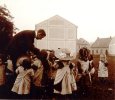
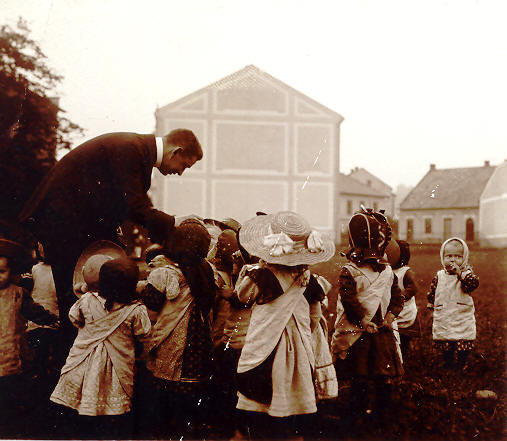
Richard with children from the Úpice factory's nursery. |
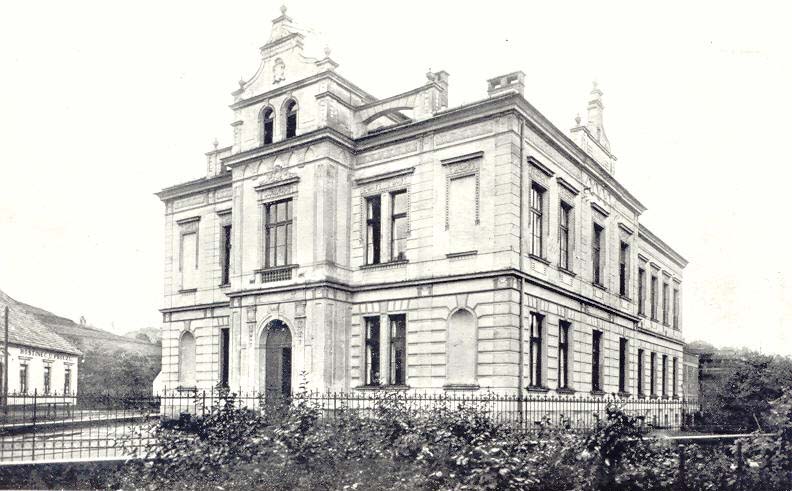
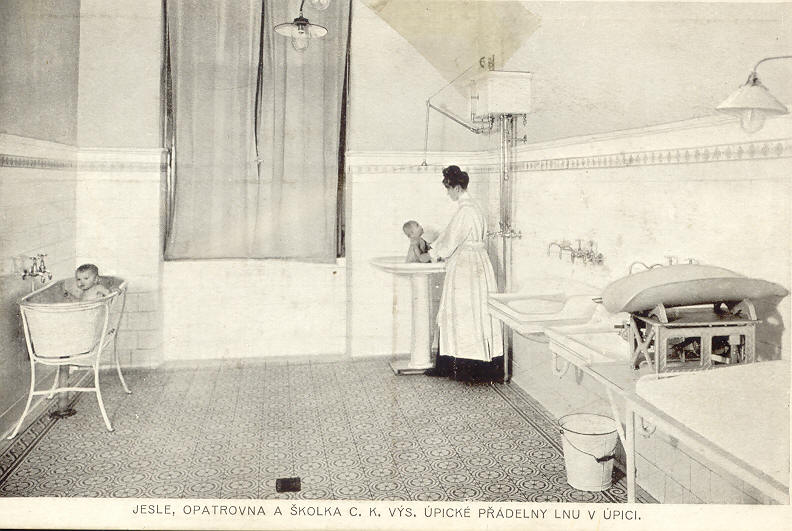
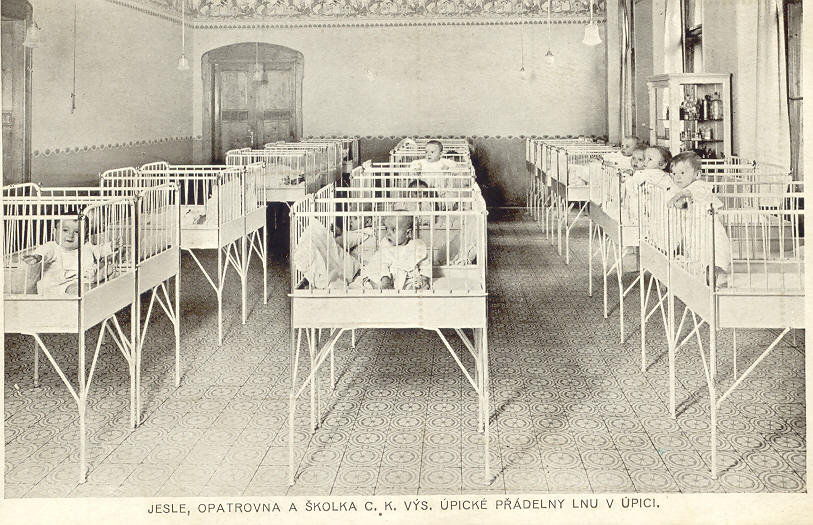
All these conditions gave me the idea that we ought to build a day-nursery for the children of working mothers.
I first tried to gather some ideas on the subject, but I found there was no precedent for that sort of thing in the
country. However, I did get one or two suggestions from children's hospitals which I visited. I also studied a
great deal of literature on the subject, and so the day-nursery came into being. To begin with it occupied just
one floor of a house, the building which you knew only dates back to 1908. But though we started on a modest scale,
it was a place where mothers could take their children in the morning and leave them under trained supervision
while they worked, so it served the purpose for which it was intended.
Needless to say, the left wing press could not admit that a manufacturer had done something humane,
so it proclaimed that I was building a school for slaves and it urged people to keep their children away from it.
But the day-nursery was such a success that the attacks soon petered out. I wish I could show you the articles
that were published at that time. I had a collection of the clippings, but of course I lost it along with all
my other possessions when I left Czechoslovakia.
The most interesting incident I recall in connection with the day-nursery is the cod liver oil episode.
We had had the children examined by a doctor and he recommended that all of them should be given a daily dose
of cod liver oil. I bought the stuff, but I had my doubts about being able to get the children to swallow it.
You see, there were lots of them to a room and I knew that if a single one were to rebel,
all the others would follow suit.
However, the nurse in charge of the day-nursery was a very competent person and she was confident that she could
handle the situation. She put the bottle on her desk and announced that this was a delicious drink intended as a
reward for good children. Since no child had been sufficiently good that day, nobody would get any.
The following day, two "good" children got a spoonful each, while the rest watched in envy.
The day after some more children were given a taste and, within a week, every child in the nursery was taking a
daily spoonful of cod liver oil, and loving it.
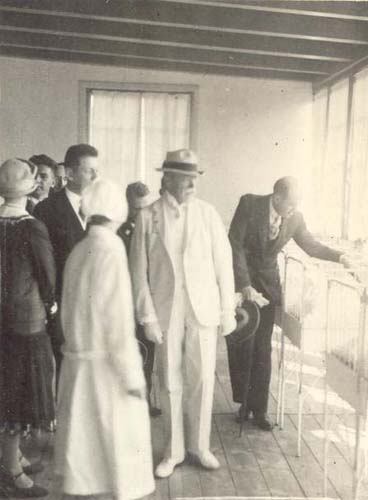
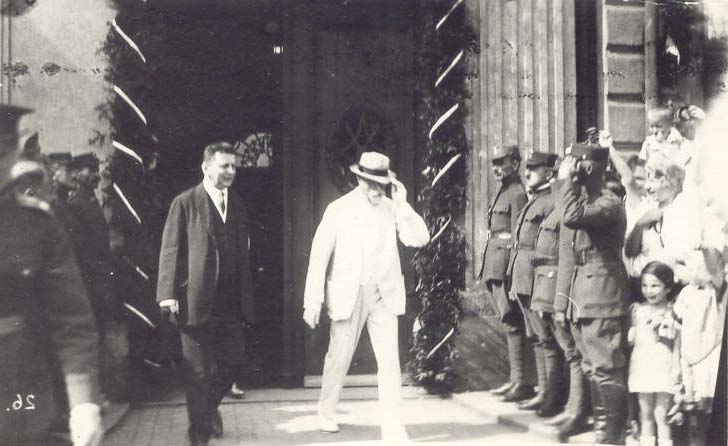
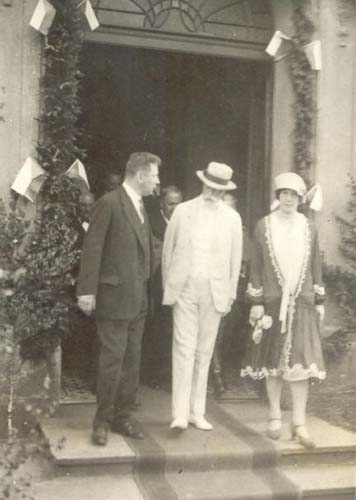
In 1926, President Thomas Masaryk was an overnight guest at Richard Morawetz'
residence, and the following day, he toured the day-nursery associated with the
factory. Memories of this exciting visit are recalled by Richard's daughter
Sonja:
Having the President as our house guest was of course
tremendously exciting. To make room for him and, presumably, his son Jan, the
three boys were moved out of the house to stay with aunt Alice in the house on
the town square. I was supposed to present Masaryk with a bouquet of flowers
and I remember practicing the one sentence, “welcome to our house, Mr.
President.” But when the time came and I saw him in his white suit – I had
never seen a man in a white suit before and anyway, the excitement was just too
much for this four-year-old – I thrust the flowers at him and broke into tears;
I never did say my words of welcome.
One famous part of the story is that my parents moved out
of their bedroom so that the President would have the best room in the house.
The following morning at breakfast my mother said to him: “I hope you had a good
night, Mr. President.” But Masaryk never told a
lie, not even a white one. “As a matter of fact,” he replied, “I didn’t sleep a
wink.” My mother was shattered, she felt that somehow she had failed in her
duties as a hostess. Masaryk saw the effect of his remark and quickly tried to
reassure her by saying that he never slept well away from home. But apparently
the damage was done.