|
|
Collections of Richard Morawetz
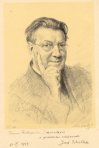
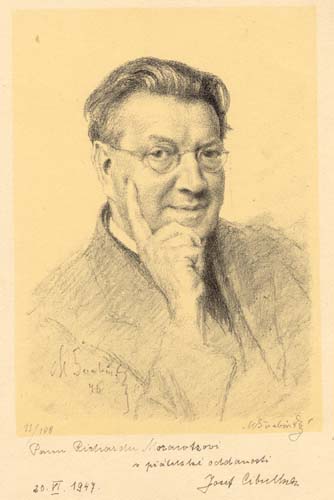
Father Josef Cibulka.
Painting by Svabinsky
Translation of dedication:
To Richard Morawetz,
with friendly respect,
Josef Cibulka
20 VI 1947 |

Jan Kábrt
Photo: 1973 |
Richard Morawetz had a large collection of art and rare manuscripts. With
few exceptions everything was left behind when he fled Czechoslovakia after the
German occupation in March 1939. Fortunately most of his collection of
paintings was saved by devoted friends,
including his administrative assistant Jan Kábrt and a Roman Catholic priest, Father
Cibulka. Richard had met Cibulka shortly after purchasing the estate in
Světlá. As owner of the castle Richard was also patron of the local church
and in this capacity he played host to the
bishop of the area and his entourage when they visited Světlá. Father Cibulka,
a great admirer of the arts and later director of the National Gallery, was a member of the bishop’s entourage and he and
Richard soon became close friends.
Thanks to Cibulka and Kábrt, Richard’s
paintings remained “on loan” in the National Gallery in Prague throughout
World War 2 and while two of them were removed to Germany (supposedly to become
part of Goering’s private collection) all the others, including the most
valuable ones, escaped that fate.
One
day after his arrival in England, Richard received a package which contained
his valuable collection of miniatures. He never did find out who smuggled them
out of Czechoslovakia and sent them to him.
After the war, the new Czechoslovak government acknowledged Richard’s
ownership of the paintings and other collections, admittedly with the proviso
that no part of them could be removed from the country.(*) But once the Communists came to power, they
confiscated all his possessions on the preposterous grounds that he had
collaborated with the Nazis. Following
the 1989 demise of the Communist government and the restoration of democracy in
Czechoslovakia, it took Richard’s children six years of badgering to get the
government to admit that the charge had been politically motivated and was groundless.
Once again, Richard’s ownership or rather,
by then, the ownership of his heirs was acknowledged, again with a refusal to
remove any of the items from the country even though all paintings by Czech
artists were donated to the National Gallery.
Subsequently the National Gallery bought some of the other paintings
including part of an altar piece by the
German artist Cranach, and the Museum of Music has bought part of the
collection of scores and manuscripts by Czech musicians. Other negotiations are continuing, with sporadic success.
Here are photographs of some of the artwork owned by Richard Morawetz:
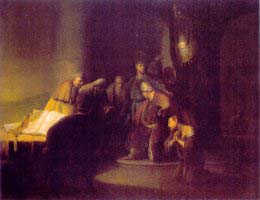
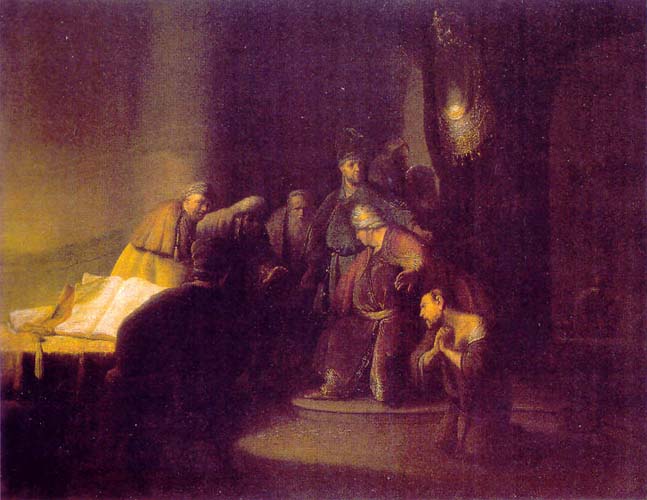
Judas returning the thirty pieces of silver
Painting by unknown 17th century Dutch artist,
attributed to Isaac Jonderville, a pupil of Rembrandt.
Oil on canvas; copy of a 1629 Rembrandt painting.
This painting was sold to a private collector in 2006.
|
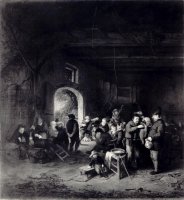
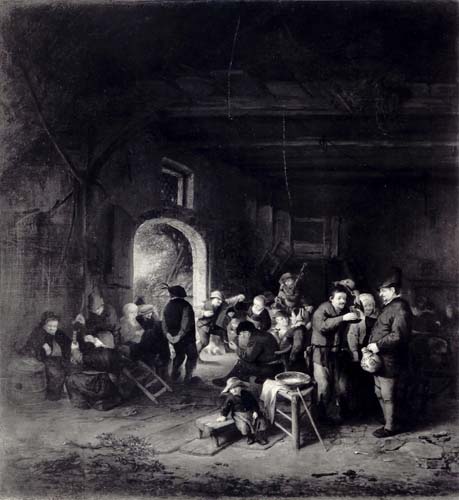
Painting by 17th century Dutch artist, Adriaen van Ostade.
This painting was sold in 2001. |
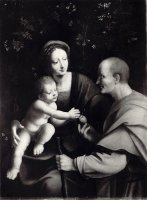
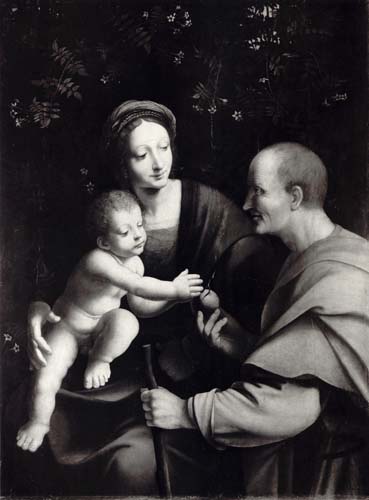
Painting by Italian artist, Francesco Melzi.
This painting was sold to the National Gallery in Prague in 1998.
|
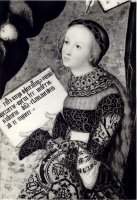
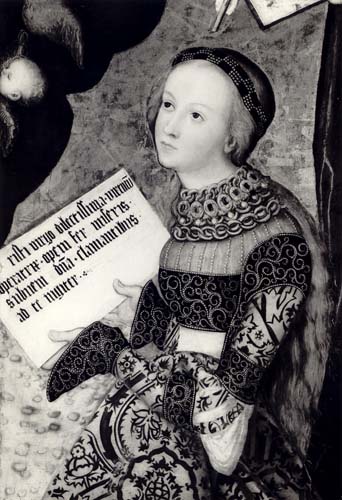
Painting by the artist Lucas Cranach. This is only a fragment of a much larger
painting destroyed during the 30-year war in the 17th century.
This painting was sold to the National Gallery in Prague in 1999.
|
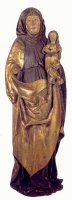
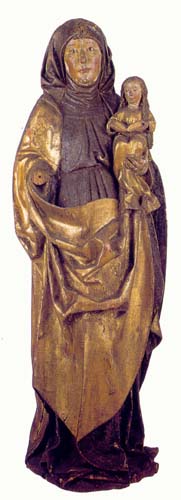
Saint Anna and the Blessed Virgin Mary
Carved polychrome and gilt wood sculpture,
typical of late 15th century.
This sculpture was sold to a private collector in 2001.
|

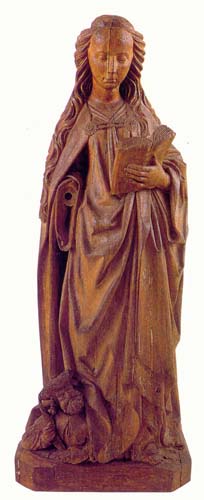
Figure of a Saint (Saint Catherine)
Carved wood, example of late 15th century sculpture from one of
advanced European centres of late Gothic art.
This sculpture was sold to a private collector in 1999.
|
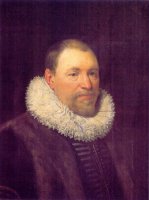
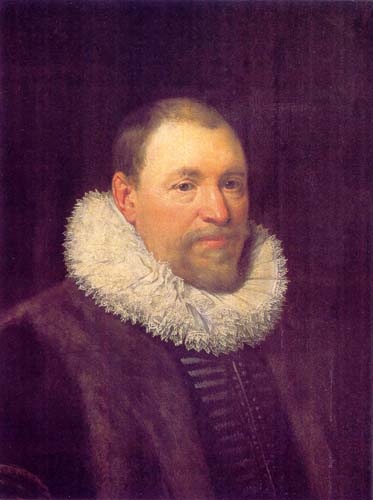
Portrait of a Man
Oil on wooden panel, painting by 17th century Dutch artist, Michiel
van Miereveld.
This painting was sold to a private collector in 2000. |
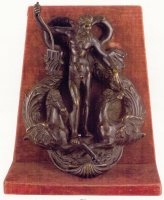
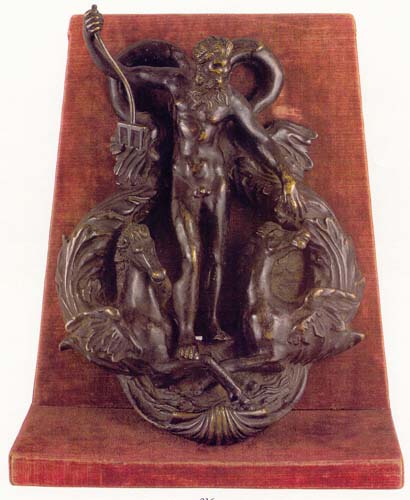
Door knocker in the form of Neptune and sea horses
Patinated bronze, by 16th century Italian sculptor, Alessandro
Vittoria.
This sculpture was sold to a private collector in 2001. |
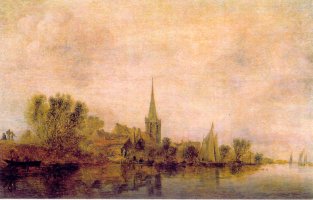
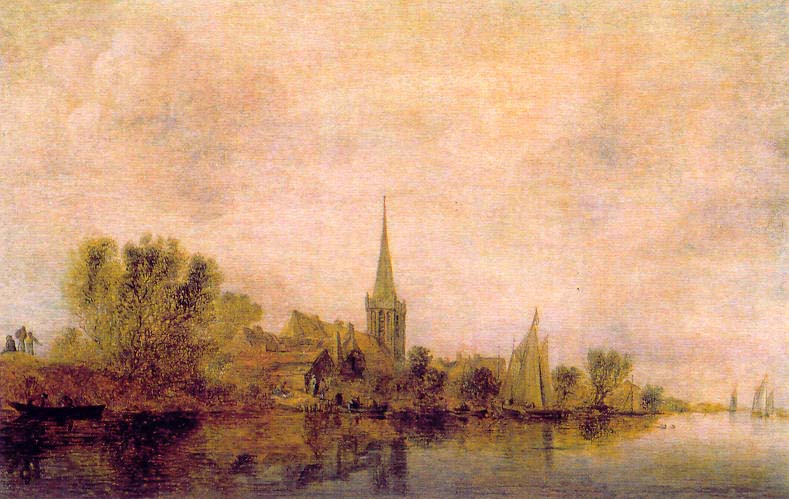
View of Overschie
Painting by unknown 17th century Dutch artist,
attributed to follower of Jan van Goyen.
Oil on wood, 1635.
This painting was given by the family as a gift.
|
|
Two Rembrandt Etchings, still in the Morawetz family today:
|
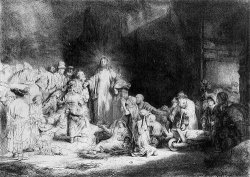
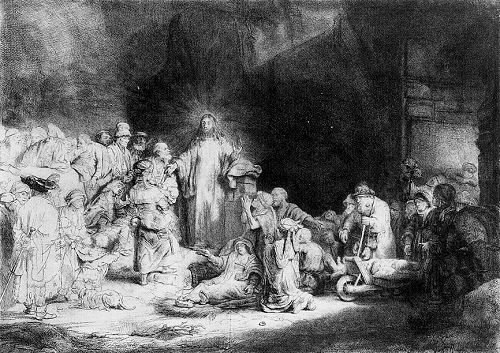
Christ Healing the Sick
Etching and dry-point, 1649, 2nd state
More commonly known as the Hundred Guilder Print, as it has been
sold various time for 100 Guilders or more, even during Rembrandt's
lifetime |
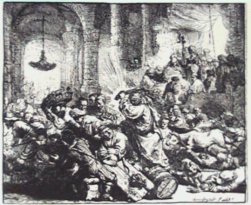
Christ driving the money lenders from the Temple
|
(*) Although the post-war Czechoslovak government
acknowledged Richard's ownership of his art collections, his factory in Úpice was promptly
nationalized under the so-called Beneš decree. This decree stated that
any enterprise which employed more than a given number of people was
nationalized in 1945, supposedly with compensation. But no compensation was ever
paid.
|